

The Indian smartphone market, a battleground for value and innovation, has just witnessed a seismic shift. For months, the dream of a truly capable 5G smartphone under Rs 10,000 seemed tantalizingly close yet just out of reach. That barrier has now decisively fallen. In the last 30 days, a wave of new launches has not only breached this psychological and practical price point but has done so with robust feature sets, fundamentally reshaping expectations for budget-conscious consumers. This development is set to accelerate 5G adoption across India, empowering millions with next-generation connectivity without breaking the bank. The race to equip every Indian with affordable 5G is no longer a distant vision; it’s the new reality.
What changed?
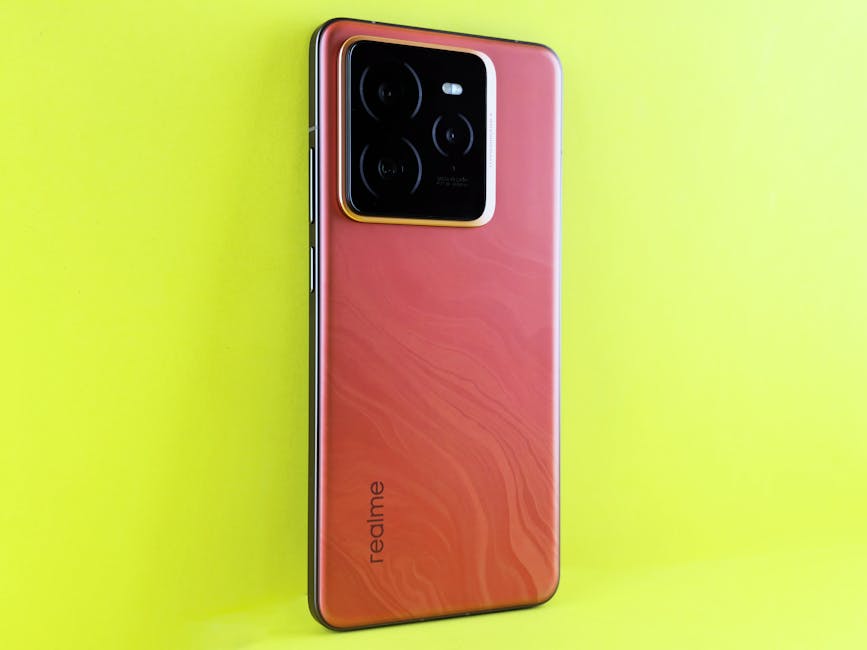
The past month’s defining moment arrived with aggressive pricing from key players, notably the Realme Narzo 70i 5G and Redmi 15C 5G. These devices, unveiled within weeks, shattered the Rs 10,000 threshold while delivering specifications previously reserved for costlier phones. MySmartPrice reported on May 8, 2026, the Narzo 70i 5G, starting at Rs 9,499, brought a 6nm MediaTek Dimensity 6080 equivalent chipset, 5000mAh battery, and 90Hz display. Gadgets360 detailed the Redmi 15C 5G, priced from Rs 9,999, countered with a Snapdragon 4 Gen 3 equivalent processor and a 50MP camera. This head-to-head competition forced brands like Poco and Infinix to recalibrate, leading to swift price adjustments and “Lite” variants. Matured supply chains for budget 5G chipsets, like the new Unisoc T760 series, also enabled cost-effective devices without sacrificing core performance. This confluence of OEM strategy and component cost reduction fundamentally altered the landscape.
Why it matters
This pricing breakthrough represents a democratisation of advanced connectivity for millions in India. Previously, sub-Rs 12,000 5G phones often came with significant compromises. Now, consumers access genuine 5G speeds, enabling seamless video streaming, faster downloads, and lag-free online gaming like BGMI. For students and gig economy workers, reliable 5G means enhanced productivity. NDTV Gadgets highlighted in a May 2026 analysis that expanded availability will drive further adoption of digital services, especially in tier-2 and tier-3 cities. It signifies 5G is no longer a premium feature but a baseline expectation, forcing manufacturers to innovate further in areas like camera quality and battery life even at the entry level. This shift is crucial for India’s digital transformation.
What to expect next
The immediate future will see an intensification of the budget 5G war. Expect more brands, including Lava and Micromax, to launch contenders, pushing features further. The next 3-6 months will likely bring refinements: improved display technology, possibly basic AMOLED panels, faster charging (25W or 33W becoming standard), and more sophisticated camera arrays with features like EIS. 91mobiles analysts predict that by Diwali 2026, the baseline for a Rs 9,999 5G phone will include a 120Hz display and potentially 6GB RAM. Telecom operators like Jio and Airtel are poised to introduce even more aggressive bundling offers, making total cost of ownership more attractive. The market will undoubtedly become more crowded, offering unprecedented choice and value.
The New Wave of Budget 5G Heroes
The past month redefined “budget 5G.” Leading are the Realme Narzo 70i 5G and Redmi 15C 5G. The Narzo 70i 5G, reported by MySmartPrice, typically features a MediaTek Dimensity 6080 equivalent 6nm chip, offering strong power efficiency and performance for smooth multitasking. It generally pairs this with 4GB RAM, 64GB storage (expandable), and a 5000mAh battery with 18W charging. Its 6.6-inch HD+ 90Hz display offers a fluid visual experience.
The Redmi 15C 5G, often highlighted by Gadgets360, frequently houses a Qualcomm Snapdragon 4 Gen 3 equivalent processor, engineered for robust 5G and efficient power. It commonly boasts a 50MP main camera and configurations often include 4GB or 6GB RAM with 128GB storage. Both phones are built for Indian conditions, featuring IP52 ratings for dust and splash resistance. Other contenders, such as the Infinix Smart 9 5G and Tecno Spark 20i 5G, have also entered, often offering larger displays or higher refresh rates around the Rs 9,000-10,000 mark.
Performance & Practicality in India
Real-world performance under Indian conditions is paramount for these sub-Rs 10,000 5G phones. New generation chipsets from MediaTek and Qualcomm are proving capable for daily tasks: smooth social media, efficient productivity, and decent casual gaming. While graphics-intensive titles remain demanding, BGMI and Call of Duty Mobile are generally playable at medium settings, enhanced by 90Hz displays.
Connectivity is a major highlight, with multi-band 5G support ensuring robust network performance on Jio and Airtel. Dual-SIM functionality remains standard. Battery life is critical, and common 5000mAh batteries consistently deliver a full day of usage, even with moderate 5G. Fast charging, typically 18W to 33W, ensures quick top-ups. Reviews cited by Android Central note good thermal management even during Indian summer heat.
Key Features to Prioritise
For a budget 5G phone, not all specifications are equal. Consumers should focus on:
- Processor & RAM: A 6nm/7nm chipset (Dimensity 6080 or Snapdragon 4 Gen 3 equivalent) with at least 4GB RAM is crucial. 6GB RAM is a bonus.
- 5G Band Support: Comprehensive 5G band support (e.g., n1, n3, n5, n8, n28, n40, n41, n77, n78) guarantees future-proofing and better coverage.
- Battery Life & Charging: A 5000mAh battery is standard and recommended. Look for at least 18W fast charging; 33W is excellent.
- Display: A 90Hz or 120Hz refresh rate offers fluidity, even on an HD+ panel. Prioritise this. Outdoor brightness is also important.
- Software & Updates: Seek clean, optimised UIs and critical security updates.
- Durability: Features like IP ratings (IP52) or basic Gorilla Glass offer peace of mind against spills and drops common in India.
Prioritising these helps make an informed decision beyond just price.
The Ecosystem Advantage & Retail Landscape
The arrival of sub-Rs 10,000 5G phones is amplified by India’s robust retail and telecom ecosystem. Amazon.in and Flipkart lead with aggressive launch discounts, bank card offers, and exchange bonuses, often bringing prices down by Rs 500-1,000. Offline retailers like Croma, Reliance Digital, and Vijay Sales also stock these models, offering hands-on experience and their own bundle deals, including extended warranties.
Telecom operators like Jio and Airtel actively promote these devices with enticing data plans, cashback, and bundled streaming subscriptions. A common strategy involves additional data benefits or discounts on 5G plans when purchasing a new device, as observed by 91mobiles analysts. This synergy creates a compelling value proposition, making 5G more accessible. Abundant affordable accessories further protect user investment.
Frequently Asked Questions
-
Are sub-Rs 10,000 5G phones truly future-proof?
While “future-proof” is a strong term, these budget 5G phones are significantly more future-ready than 4G counterparts. They support multiple 5G bands, ensuring compatibility with evolving network infrastructure for several years. For basic 5G connectivity and daily use, they are well-equipped for the foreseeable future, though high-end features will always advance in pricier segments.
-
What are the main compromises to expect in this price segment?
Expect compromises primarily in camera versatility (often a decent main sensor but weaker ultrawide/macro), display resolution (often HD+), plastic builds, and slower charging compared to mid-range devices. Software updates might also be less frequent. However, core performance, battery life, and 5G connectivity are surprisingly robust.
-
Can these phones handle gaming like BGMI effectively?
Yes, most new sub-Rs 10,000 5G phones with Dimensity 6080 or Snapdragon 4 Gen 3 equivalents can handle BGMI. Playing on medium graphics settings usually provides the smoothest experience. The 90Hz displays and improved chipsets offer a playable and enjoyable experience for popular titles, a significant improvement over previous budget generations.
The arrival of genuinely capable 5G smartphones under Rs 10,000 marks a pivotal moment for the Indian market. It signals not just a lowering of price barriers but a significant leap in accessibility and utility for millions. This isn’t merely about faster internet; it’s about empowering a larger segment of the population with tools for education, commerce, entertainment, and communication previously restricted by cost. As competition intensifies, consumers stand to gain the most, with an increasing array of feature-rich options at unprecedented price points. The budget 5G revolution is here, set to redefine connectivity for every Indian.
For more on this topic, see our gadgets under Rs 10,000.
About the Author