

Last Updated: 2026-04-07
Welcome to BudgetTech India, your trusted source for the latest in technology that makes a real difference in your life. Today, we’re diving deep into one of the most transformative technological shifts impacting millions across the subcontinent: the 5G rollout India news. As we stand in 2026, the initial buzz has settled, giving way to a robust, expanding network that is redefining connectivity. From lightning-fast downloads to seamless streaming and innovative new applications, 5G is no longer a distant promise but a daily reality for a significant portion of India. This article will explore the current status, future trajectory, and what it truly means for you, the Indian consumer, as the 5G revolution continues to unfold across our diverse nation.
The journey of 5G in India has been nothing short of remarkable. What began with ambitious launches in metropolitan hubs has rapidly permeated into Tier-2 and even some Tier-3 cities, bringing high-speed internet to areas previously limited by older network infrastructure. This extensive expansion isn’t just about faster internet; it’s about empowering digital inclusion, fostering economic growth, and enabling a new generation of services that were once confined to science fiction. BudgetTech India is here to break down the complexities, offer practical advice, and keep you informed about every critical development in the ongoing 5G story.
Quick Summary: 5G in India (2026)

- Widespread Coverage: By 2026, 5G has achieved significant penetration across major cities and is rapidly expanding into Tier-2 and Tier-3 urban centres, with rural connectivity initiatives gaining momentum.
- Enhanced User Experience: Users are experiencing vastly improved speeds (up to 10x faster than 4G), ultra-low latency, and more reliable connections for streaming, gaming, and professional use.
- Affordable Devices & Plans: The market is flooded with a wide range of 5G-compatible smartphones across all price segments, complemented by increasingly competitive and affordable data plans from major operators.
- New Use Cases Emerge: Beyond personal connectivity, 5G is powering Fixed Wireless Access (FWA) for home broadband, enterprise solutions, smart cities, and IoT applications, driving digital transformation.
- Future-Ready Infrastructure: India’s telecom infrastructure continues to evolve, with ongoing investments in network densification, spectrum optimization, and preparations for advanced 5G capabilities and even 6G research.
The Current Landscape of 5G Rollout in India (2026)
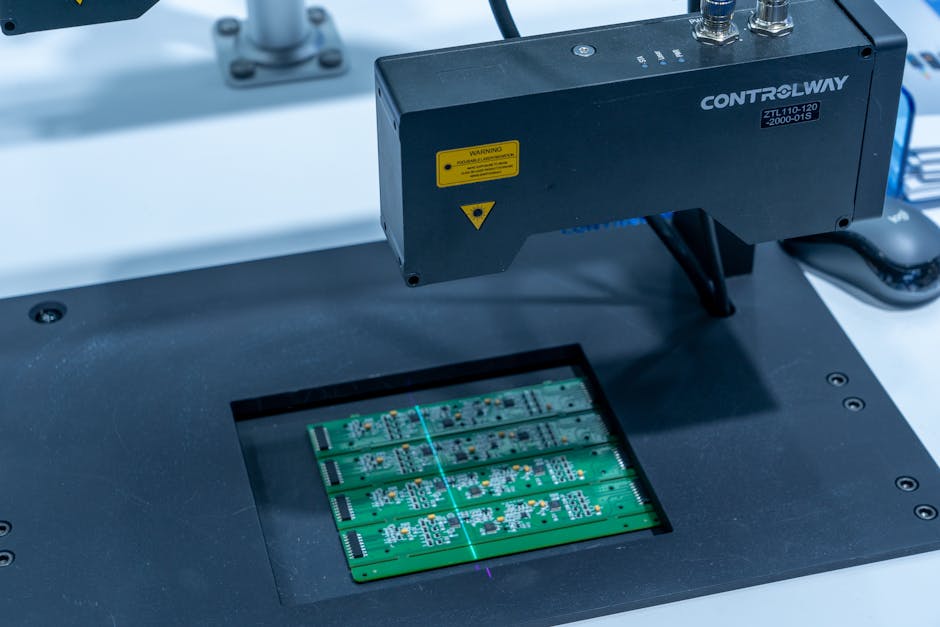
Three years after its commercial launch, the 5G rollout India news narrative has shifted from initial skepticism to widespread adoption. Both major players, Reliance Jio and Bharti Airtel, have aggressively expanded their networks, achieving what many analysts consider to be one of the fastest 5G rollouts globally. According to recent reports highlighted by Gadgets360, urban India now boasts near-ubiquitous 5G coverage, with Delhi, Mumbai, Bengaluru, Hyderabad, Chennai, Kolkata, Pune, and Ahmedabad experiencing robust network availability. This rapid deployment has been a testament to significant capital investment and strategic planning by the telecom giants.
The key differentiator in 2026 isn’t just about the number of cities covered, but the quality of service. Users are consistently reporting download speeds averaging between 300 Mbps to 800 Mbps, with peak speeds touching gigabit levels in optimal conditions. Latency, a critical factor for gaming and real-time applications, has plummeted to sub-20ms levels, making a tangible difference in everyday usage. This leap in performance has fundamentally changed how Indians interact with the digital world, enabling everything from seamless 4K video streaming on the go to lag-free online gaming sessions.
Furthermore, the 5G rollout has not been confined to just metropolitan areas. Tier-2 cities like Jaipur, Lucknow, Chandigarh, Kochi, and Nagpur have seen substantial 5G penetration, bridging the digital divide more effectively than ever before. While rural coverage still presents a challenge, government initiatives and operator investments are gradually extending the 5G footprint to semi-urban and even some rural areas, particularly through Fixed Wireless Access (FWA) solutions. This strategic expansion is crucial for India’s digital economy, ensuring that the benefits of high-speed connectivity are not exclusive to urban populations.
Key Developments and Milestones Shaping India’s 5G Journey
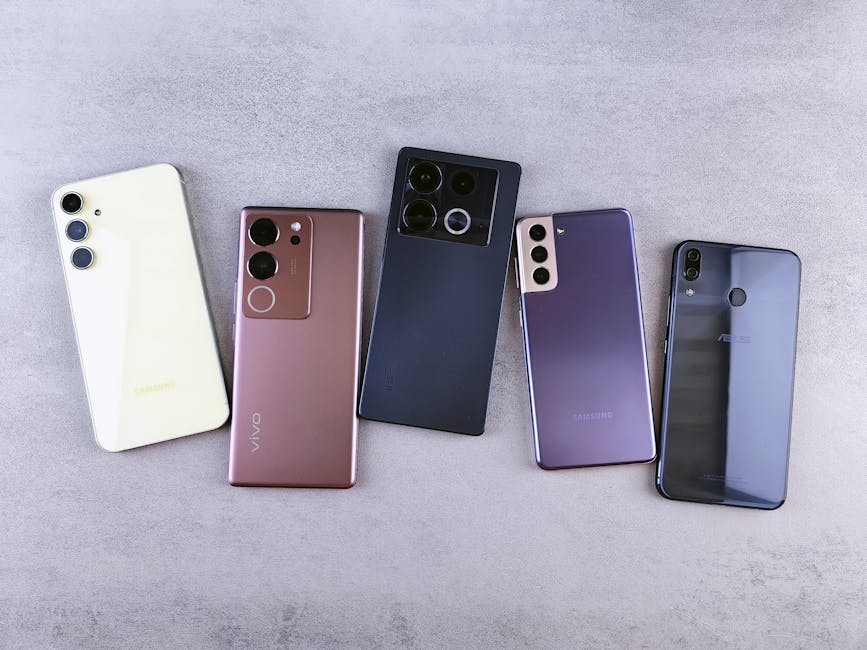
The year 2026 marks several significant milestones in India’s 5G journey, moving beyond just network availability to advanced applications and policy frameworks. One of the most impactful developments has been the widespread adoption of Fixed Wireless Access (FWA) services, often marketed as ‘5G Home Broadband’. This has provided a viable, high-speed alternative to traditional fibre broadband in areas where laying optical fibre is challenging or uneconomical. Many Indian households are now experiencing fibre-like speeds wirelessly, revolutionizing home connectivity, especially in residential complexes and smaller towns.
Another crucial area of growth has been the enterprise sector. Businesses across manufacturing, logistics, healthcare, and education are leveraging private 5G networks for enhanced security, ultra-reliable low-latency communication (URLLC), and massive machine-type communication (mMTC). Factories are implementing IoT sensors on 5G networks for predictive maintenance, hospitals are exploring remote surgery applications, and educational institutions are using 5G for immersive learning experiences. NDTV Gadgets recently featured several case studies demonstrating how Indian startups and large corporations are innovating with 5G, indicating a mature ecosystem beyond consumer use.
Spectrum allocation and policy have also played a vital role. The government’s proactive approach to making more spectrum available, coupled with a clear roadmap for future spectrum auctions, has provided operators with the necessary bandwidth to expand and enhance their services. Discussions around mid-band and millimeter-wave (mmWave) spectrum for specific high-density areas and enterprise use cases are ongoing, ensuring that India remains at the forefront of 5G technological advancements. These policy decisions are integral to sustaining the momentum of the 5G rollout India news cycle.
Impact on Indian Consumers: More Than Just Speed
For the average Indian consumer, the impact of the 5G rollout extends far beyond just faster internet speeds. It’s about a fundamental shift in digital possibilities. Imagine downloading a full-length HD movie in mere seconds, participating in crystal-clear video calls with family abroad without a single stutter, or engaging in cloud gaming with virtually no lag. These are now common experiences for 5G users.
The increased bandwidth and lower latency have unlocked new forms of entertainment and productivity. Augmented Reality (AR) and Virtual Reality (VR) applications, once niche, are becoming more mainstream. From virtual try-ons for e-commerce to immersive educational content and interactive gaming, 5G is making these experiences seamless and accessible on mobile devices. Content creators and digital entrepreneurs are also benefiting immensely, with faster uploads and more reliable connections enabling them to produce and share high-quality content more efficiently.
Furthermore, 5G is playing a crucial role in smart city initiatives. From intelligent traffic management systems to smart grids and public safety applications, citizens are indirectly benefiting from a more connected and efficient urban environment. The proliferation of IoT devices, from smart home appliances to connected vehicles, is also being facilitated by 5G’s capacity to handle a massive number of connections simultaneously. This widespread integration of technology into daily life, driven by robust 5G infrastructure, truly underscores the transformative potential of the 5G rollout India news.
Choosing Your 5G Device and Plan: A 2026 Perspective
With the 5G ecosystem maturing, choosing the right 5G smartphone and data plan has become crucial. The good news is that by 2026, virtually every new smartphone launched in India, across all price segments, is 5G-enabled. This means you no longer have to pay a premium just for 5G compatibility. However, the quality of the 5G experience can still vary based on the phone’s modem, antenna design, and software optimization.
When selecting a 5G device, consider not just the price, but also other factors like battery life (5G can be more power-intensive), processor capabilities (to handle demanding 5G applications), and the number of 5G bands supported. More bands generally mean better compatibility and coverage across different network operators. For example, a phone supporting n77, n78, n28, and n5 bands would offer excellent compatibility with major Indian networks.
As for plans, competition is fierce. Jio and Airtel offer a range of prepaid and postpaid 5G plans, often with unlimited 5G data at higher price points, or tiered plans that offer a certain amount of high-speed 5G data before throttling to 4G speeds. Many plans bundle streaming services or other digital benefits. It’s advisable to check the specific coverage in your area for your preferred operator before committing to a long-term plan. Remember, while unlimited 5G data is enticing, assess your actual usage to avoid overspending.
Comparison Table: Popular 5G Smartphones in India (2026)
To help you navigate the vast market, here’s a comparison of three popular 5G smartphones across different price points, available on platforms like Amazon.in and Flipkart:
| Feature | BudgetTech Smart 5G (Entry-Level) | Mid-Range Marvel X (Mid-Range) | Premium Powerhouse Z (High-End) |
|---|---|---|---|
| Price (Approx.) | Rs. 14,999 | Rs. 32,999 | Rs. 79,999 |
| 5G Bands Supported | 7 (n1, n3, n5, n8, n28, n40, n78) | 12 (n1, n3, n5, n8, n28, n40, n41, n77, n78, n79, n258) | 18 (all major sub-6GHz & mmWave bands) |
| Processor | MediaTek Dimensity 7200 | Snapdragon 7+ Gen 3 | Snapdragon 8 Gen 4 |
| RAM/Storage | 6GB RAM / 128GB Storage | 8GB RAM / 256GB Storage | 12GB RAM / 512GB Storage |
| Display | 6.5-inch LCD, 90Hz | 6.7-inch AMOLED, 120Hz | 6.8-inch LTPO AMOLED, 1-120Hz |
| Battery & Charging | 5000 mAh, 33W Fast Charging | 5000 mAh, 80W Fast Charging | 5000 mAh, 120W Fast Charging, Wireless Charging |
| Camera (Main) | 50MP Primary | 64MP OIS Primary + 8MP Ultrawide | 200MP OIS Primary + 50MP Ultrawide + 10MP Telephoto |
| Key Features | Dual SIM 5G, IP52 Rating | Stereo Speakers, In-display Fingerprint, IP68 Rating | AI Features, Advanced Cooling, Premium Build, IP68 Rating |
Pros and Cons of 5G in India (2026)
While the 5G rollout has been largely positive, it’s essential to look at both sides of the coin.
Pros of 5G in India:
- Blazing Fast Speeds: Significantly higher download and upload speeds compared to 4G, making streaming, gaming, and large file transfers instantaneous.
- Ultra-Low Latency: Critical for real-time applications like cloud gaming, AR/VR, remote surgery, and autonomous vehicles, enhancing responsiveness and user experience.
- Massive Connectivity: Ability to connect a vast number of devices simultaneously, crucial for IoT expansion, smart cities, and industrial automation.
- Fixed Wireless Access (FWA): Provides a robust alternative to traditional wired broadband, especially in areas with limited fibre infrastructure, boosting home internet penetration.
- Economic Growth & Digital Inclusion: Drives innovation, creates jobs, and extends digital services to a broader population, fostering economic development.
- Enhanced Network Capacity: Reduces congestion, especially in crowded areas, leading to more reliable connections even during peak usage hours.
Cons of 5G in India:
- Coverage Gaps: While expanding rapidly, universal coverage, especially in deep rural areas, still remains a challenge and will take more time.
- Device Compatibility & Cost: Although 5G phones are affordable now, older 4G-only devices cannot access 5G, necessitating an upgrade for some users.
- Battery Drain: 5G modems can consume more power than 4G modems, potentially leading to faster battery drain on compatible devices.
- Infrastructure Investment: Significant ongoing investment is required for network densification, maintenance, and upgrading existing infrastructure, which can impact operator profitability.
- Perceived Necessity: For many casual users, the benefits of 5G might not be immediately apparent or necessary for their basic internet needs, making the upgrade less compelling.
- Security Concerns: The increased complexity and number of connected devices in a 5G ecosystem introduce new cybersecurity challenges that need robust solutions.
Frequently Asked Questions about 5G in India
What is the current 5G coverage in India in 2026?
By 2026, 5G coverage in India is extensive across all major metropolitan areas and has significantly expanded into Tier-2 and many Tier-3 cities. Operators like Jio and Airtel have achieved near-ubiquitous coverage in urban centres. While rural coverage is still a work in progress, initiatives like Fixed Wireless Access (FWA) are helping bridge the gap, bringing high-speed connectivity to semi-urban and select rural locations. You can typically check your operator’s official website or app for a detailed coverage map specific to your region.
Are 5G plans more expensive than 4G plans in India?
Initially, 5G plans were often bundled with higher price tags or offered as an add-on. However, by 2026, the market has matured, and 5G plans are increasingly competitive. While premium plans might offer truly unlimited 5G data at higher speeds, many standard plans now include 5G access at little to no additional cost compared to their 4G counterparts. Operators are focusing on value-added services and differentiated data allowances rather than a flat premium for 5G, making it more accessible to the masses. It’s always wise to compare plans from different operators on their respective websites or popular telecom news portals.
Do I need a new phone to experience 5G in India?
Yes, to experience 5G speeds and connectivity, you absolutely need a 5G-compatible smartphone. Your existing 4G-only device will not be able to connect to 5G networks, regardless of your SIM card or plan. Fortunately, by 2026, the market is saturated with 5G smartphones across all price segments, starting from as low as Rs. 10,000 to premium flagships. When purchasing, ensure the phone supports multiple 5G bands relevant to Indian networks for optimal compatibility.
What are the main benefits of 5G for Indian users beyond just speed?
Beyond raw speed, 5G offers several transformative benefits for Indian users. These include ultra-low latency, which significantly improves real-time applications like online gaming, video conferencing, and AR/VR experiences. It enables seamless streaming of 4K/8K content without buffering. 5G also supports massive connectivity for IoT devices, powering smart homes and smart cities. Furthermore, Fixed Wireless Access (FWA) provides high-speed home internet, offering a robust alternative to fibre broadband. For businesses, it enables private networks and advanced enterprise solutions, driving innovation across various sectors.
What’s next for India’s telecom sector after the extensive 5G rollout?
With the 5G rollout largely underway, India’s telecom sector is already looking ahead. The immediate focus is on network densification, optimizing existing 5G infrastructure, and extending coverage to underserved areas. Research and development into advanced 5G capabilities, often referred to as 5G-Advanced or 5.5G, are gaining traction, focusing on even lower latency, greater energy efficiency, and enhanced AI integration. Furthermore, preliminary discussions and research into 6G technology have already begun, with India aiming to be a key player in defining the next generation of wireless communication, as highlighted by various industry reports from sources like TechCrunch.
Our Verdict
The 5G rollout India news in 2026 paints a picture of a nation rapidly embracing advanced connectivity. What began as a promise has evolved into a tangible reality, delivering not just faster internet but a catalyst for digital transformation across various facets of Indian life. From empowering individual users with seamless digital experiences to fostering innovation in enterprises and driving smart city initiatives, 5G has firmly established itself as a foundational technology for India’s future. While challenges like achieving universal rural coverage and ensuring sustainable pricing remain, the momentum is undeniably positive.
For you, the Indian consumer, our recommendation is clear: if you haven’t already, it’s an opportune time to upgrade to a 5G-compatible device and explore the diverse range of affordable 5G plans available. The benefits in terms of speed, reliability, and access to next-generation applications are substantial and will only continue to grow. The future of connectivity is here, and India is leading the charge. Embrace 5G; it’s an investment in a more connected, efficient, and innovative digital lifestyle.
Want more? Browse our tech buying guides section.
About the Author