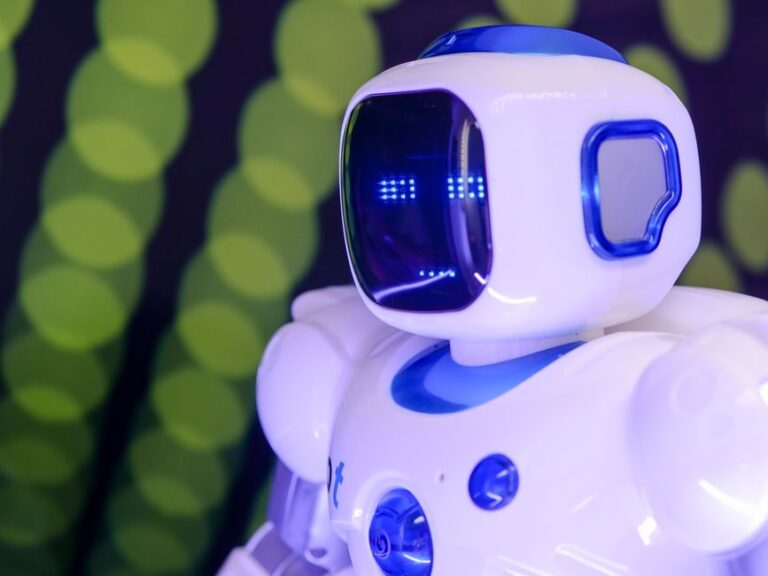
Picture this: It’s 2025. You’re trying to book a local train ticket from Chennai to Madurai, while simultaneously ordering authentic Hyderabadi biryani and getting an update on the latest government scheme for farmers in your district. Sounds like a lot, right? Not for your AI assistant. In a nation as diverse and dynamic as India, the promise of artificial intelligence isn’t just about efficiency; it’s about understanding. As we stand on the cusp of an AI-powered era, Indians are no longer just passive consumers; we’re discerning users, meticulously weighing our options. The big question looming over our smart homes and offices is: which AI truly gets us?
The Quest for Context: Why Global AI Falls Short in India
Multilingual India AI – Image via Pexels
For years, global AI giants like Siri and Alexa have offered us a glimpse into the future. They’ve played our favourite English songs, set reminders, and answered general trivia. But for the average Indian, their utility often hits a cultural and linguistic wall. Try asking for the best place to buy authentic *paithani* sarees in Nashik, or to translate a complex government circular from Hindi to Marathi, and you’ll often encounter a blank stare (or a generic web search result).
The core problem isn’t the AI’s intelligence, but its contextual intelligence. India is a subcontinent of 22 official languages, thousands of dialects, unique regional accents, and a tapestry of cultural nuances that global models, trained predominantly on Western datasets, struggle to comprehend. This gap creates friction, making these powerful tools feel less like personal assistants and more like well-meaning but ultimately foreign entities. We need an AI that doesn’t just process data but understands the rhythm of India – from the bustling streets of Mumbai to the serene backwaters of Kerala.
The Great AI Showdown: BharatAI vs. GlobalMind
AI in Indian life – Image via Pexels
In 2025, the Indian AI landscape is buzzing with two formidable contenders vying for supremacy in our digital lives: the homegrown champion, **BharatAI**, and the globally acclaimed, locally refined **GlobalMind**. Both offer impressive capabilities, but their core philosophies and strengths diverge significantly.
BharatAI: The Soul of India, Digitized
Developed with a deep understanding of India’s unique challenges and opportunities, BharatAI is designed from the ground up to be truly *Bharatiya*. Its most compelling feature is its unparalleled multilingual support, fluently conversing in Hindi, Tamil, Bengali, Marathi, Telugu, Kannada, and many more, with a remarkable grasp of regional accents and colloquialisms. Need to find out about the *Puja* timings for Diwali in your locality, or navigate the complex portal for your state’s agricultural subsidy? BharatAI excels here.
Integration with local services is another cornerstone. BharatAI seamlessly connects with UPI payment systems, local e-commerce platforms like Flipkart and JioMart, and even helps decipher public transport schedules specific to various Indian cities. Data privacy, a growing concern, is also a key selling point, with developers emphasizing a “data stays in India” approach, resonating deeply with patriotic users. As noted by a recent analysis on Gadgets360, “BharatAI’s success hinges on its ability to offer hyper-localized solutions that global players simply cannot replicate without years of dedicated, ground-up development.”
GlobalMind: The World at Your Fingertips, Tailored for India
GlobalMind, while having its roots in international tech giants, has made significant strides in adapting to the Indian market. Its strength lies in its vast global knowledge base, advanced generative AI capabilities, and seamless integration with international productivity tools and research databases. For professionals working with global teams, or students researching international topics, GlobalMind is an indispensable asset.
While not as deeply embedded in regional languages as BharatAI, GlobalMind offers robust English language processing, including nuanced understanding of Indian English accents. Its security protocols, backed by years of global enterprise-level development, offer a strong sense of reliability for users handling sensitive information. Recently, Android Authority highlighted GlobalMind’s strategy: “Instead of competing directly on hyper-localization, GlobalMind is focusing on providing a premium, globally connected AI experience, augmented with critical India-specific features for urban and professional users.” They’ve invested heavily in partnerships with key Indian tech players to improve localized content and services, though arguably still playing catch-up to BharatAI’s inherent cultural understanding.
Expert Insight: The Power of Localisation
“The AI race in India isn’t just about who has the most advanced algorithms; it’s about who understands the user’s daily life best,” explains Dr. Ananya Sharma, a leading AI ethicist and cultural computing expert at IIT Bombay. “BharatAI’s strength lies in its ‘cultural proximity.’ It understands the nuances of Indian festivals, the complexities of our bureaucracy, and the varied linguistic landscape. This isn’t just about translation; it’s about context and intent. GlobalMind, while powerful, often struggles with this inherent understanding, leading to a less intuitive experience for many.”
Dr. Sharma further elaborates, “However, GlobalMind offers unparalleled access to global information and robust enterprise-grade solutions. The choice for an Indian user in 2025 often boils down to their primary use case: Do they need an AI that helps them navigate their immediate Indian world, or one that connects them seamlessly to global information and professional tools?”
Conclusion: The Future is Hybrid
In 2025, the AI landscape in India is vibrant and competitive. There isn’t a single ‘best’ AI; rather, there’s the ‘best fit’ for individual needs. BharatAI is clearly the frontrunner for those seeking deep cultural and linguistic integration, making daily Indian life simpler and more connected. GlobalMind, on the other hand, appeals to those who prioritize global connectivity, advanced research capabilities, and enterprise-level reliability.
As both platforms continue to evolve, we anticipate a future where users might even leverage both – perhaps BharatAI for personal, local interactions and GlobalMind for professional, global tasks. The competition is driving innovation, pushing both contenders to refine their offerings, ultimately benefiting the diverse and demanding Indian user base.
Final Thoughts: Beyond the Algorithm, Towards Empathy
As we sift through data sheets and feature lists, it’s easy to forget what truly makes an AI indispensable: its ability to empathize, to understand our unspoken needs, and to seamlessly blend into our lives without feeling like a foreign object. For India, this means an AI that truly listens, understands the lilt in a regional dialect, recognizes the significance of a local festival, and helps navigate the unique intricacies of our society. The showdown between BharatAI and GlobalMind isn’t just a tech battle; it’s a fascinating experiment in how technology can either adapt to humanity or demand humanity adapt to it. Which future will we choose to empower? The answer, as always, lies with us.