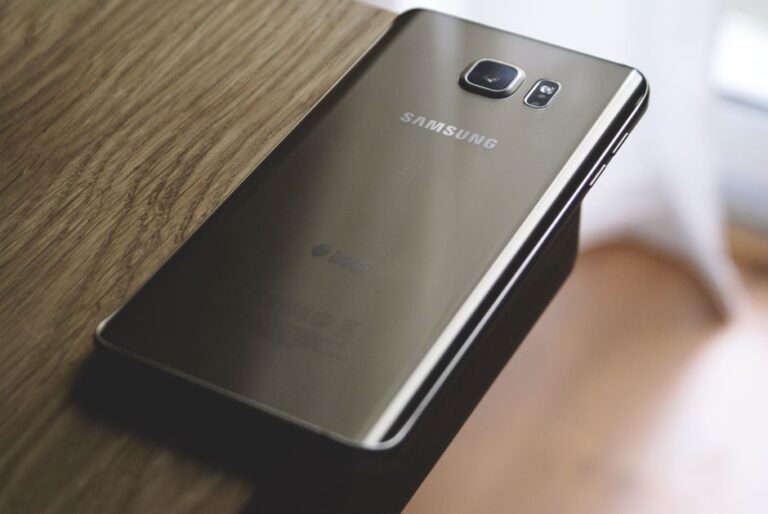

Choosing a new 5G smartphone in August 2026, especially in the competitive sub-Rs 12,000 segment, often boils down to a few critical trade-offs. For BudgetTech India readers, two prominent contenders consistently emerge: the Samsung Galaxy M15 5G and the Redmi 13 5G. While both promise an affordable entry into the 5G ecosystem, their approaches to delivering value diverge significantly. The Samsung M15 5G, with its hallmark Super AMOLED display and extensive software support, caters to users prioritising a vibrant visual experience and long-term device relevance. In contrast, the Redmi 13 5G typically offers a robust overall package, often excelling in raw performance-for-price and faster charging speeds, making it a strong contender for those seeking immediate value and responsiveness. This article delves deep into their practical differences, helping you decide which device truly aligns with your specific needs and usage patterns in the Indian context.
Quick Summary
- Display: Samsung M15 5G offers a superior Super AMOLED screen, while Redmi 13 5G features a competent IPS LCD.
- Battery Life: The M15 5G typically boasts a larger battery, providing extended usage, though Redmi often offers faster in-box charging.
- Software Updates: Samsung promises significantly longer OS and security updates, ensuring better longevity.
- Performance: Redmi 13 5G often edges out with a slightly more powerful chipset for gaming and demanding apps in its price bracket.
- After-Sales: Both brands have extensive service networks, but Samsung’s perceived reliability and widespread presence can be an advantage.
At a Glance: Samsung M15 5G vs Redmi 13 5G
| Feature | Samsung Galaxy M15 5G | Redmi 13 5G |
|---|---|---|
| Expected Price (August 2026) | Rs 10,999 (4GB/128GB) | Rs 9,499 (4GB/128GB) |
| Display Type & Size | 6.5-inch Super AMOLED, 90Hz | 6.79-inch IPS LCD, 90Hz |
| Processor | MediaTek Dimensity 6100+ | Qualcomm Snapdragon 4 Gen 2 |
| RAM / Storage Options | 4GB/6GB RAM, 128GB Storage | 4GB/6GB/8GB RAM, 128GB/256GB Storage |
| Main Camera | 50MP (OIS) + 5MP (UW) + 2MP (Macro) | 50MP (EIS) + 2MP (Depth) |
| Front Camera | 13MP | 8MP |
| Battery Capacity | 6000 mAh | 5000 mAh |
| Charging Speed | 25W (No charger in box) | 18W (Charger in box) |
| Software & Updates | Android 16 (4 OS, 5 years security) | Android 15 (2 OS, 3 years security) |
| 5G Bands Supported (India) | ~13-15 bands (e.g., n1, n3, n5, n8, n28, n40, n41, n77, n78) | ~8-10 bands (e.g., n1, n3, n5, n8, n28, n40, n77, n78) |
| IP Rating | Not officially specified (basic splash resistance expected) | IP53 (Dust and splash resistant) |
Performance and Software Experience
In August 2026, the longevity and responsiveness of a budget smartphone are heavily influenced by its processor and software commitment. The Samsung Galaxy M15 5G, powered by the MediaTek Dimensity 6100+, offers a competent experience for everyday tasks. This chipset, while not a powerhouse, handles social media, web browsing, and casual gaming like Ludo or Subway Surfers with reasonable fluidity. Multitasking between 5-6 common applications, such as WhatsApp, Google Maps, and YouTube, remains largely smooth. However, pushing it with graphically intensive titles like BGMI or Call of Duty Mobile on higher settings will reveal its limitations, potentially leading to frame drops and noticeable heating during extended sessions. The M15 5G’s strength in the software department is its commitment to updates: Samsung’s promise of 4 generations of Android OS updates and 5 years of security patches means that by August 2026, it would likely be running Android 16, with continued security support well into 2029. This extended support is unparalleled in its price segment, significantly enhancing its long-term value and security.
The Redmi 13 5G, on the other hand, typically features the Qualcomm Snapdragon 4 Gen 2 chipset. This processor often provides a slightly snappier performance for daily operations and manages light to moderate gaming more efficiently than the Dimensity 6100+. Apps tend to open a fraction faster, and the overall UI navigation feels marginally more responsive, particularly for users who frequently switch between applications. For a college student in Pune using Jio 5G for both studies and entertainment, the Redmi 13 5G’s processor might offer a more consistently smooth experience when juggling online classes, streaming content, and quick gaming breaks. However, Redmi’s software update policy, typically 2 major Android OS updates and 3 years of security patches, means that by August 2026, the Redmi 13 5G would likely be on Android 15 and approaching the end of its official support cycle. While Xiaomi’s HyperOS offers extensive customisation and features, it can sometimes come with pre-installed bloatware, though much of it can be uninstalled. Samsung’s One UI, while also featuring some pre-installed apps, is generally perceived as cleaner and more refined, offering a consistent user experience that benefits from the extended software support.
Display and Multimedia Experience
For many Indian consumers, especially those in tier-2 cities who rely on their smartphones for entertainment and communication, the display quality is paramount. The Samsung Galaxy M15 5G truly shines here, featuring a 6.5-inch Super AMOLED display with a 90Hz refresh rate. This panel delivers vibrant colours, deep blacks, and excellent contrast ratios, making content consumption a joy. Watching movies on platforms like Netflix or Hotstar, browsing photos, or simply navigating the UI feels more immersive and visually appealing. The AMOLED panel also offers superior outdoor visibility, crucial for users commuting or spending time outdoors in India’s bright sunlight. With a peak brightness that often exceeds 800 nits, reading messages or checking directions on Google Maps, even under the harsh afternoon sun, is a comfortable experience. The 90Hz refresh rate ensures smooth scrolling and animations, elevating the overall user interaction.
The Redmi 13 5G counters with a larger 6.79-inch IPS LCD, also typically offering a 90Hz refresh rate. While not matching the AMOLED’s deep blacks and vibrant colours, Redmi’s LCD is still a very capable panel. It offers good colour accuracy and decent brightness, making it perfectly suitable for everyday use, including streaming videos, browsing, and social media. For users who consume a lot of content, the larger screen real estate on the Redmi 13 5G can be an advantage, providing a more expansive viewing experience. However, outdoor visibility is where the LCD falls short compared to AMOLED; under direct sunlight, it may struggle more, requiring users to seek shade or increase brightness manually to maximum. Both phones generally feature a single bottom-firing speaker, which provides adequate volume for casual listening but lacks the richness and stereo separation found in higher-priced devices. For a truly immersive audio experience, both devices support Bluetooth headphones and typically retain the 3.5mm headphone jack, a practical feature for many Indian users who still prefer wired audio solutions.
Camera Capabilities
Photography has become a core function of smartphones, and in the budget segment, the focus is often on a reliable main sensor. The Samsung Galaxy M15 5G typically sports a versatile triple camera setup, led by a 50MP primary sensor that often includes Optical Image Stabilisation (OIS). OIS is a significant advantage in this price bracket, helping to reduce blur in photos, especially in challenging lighting conditions or when shooting handheld videos. This translates to sharper images and more stable video footage, which is particularly useful for capturing memories at family events or travel vlogs. The M15 5G also includes a 5MP ultrawide sensor, allowing users to capture broader landscapes or group photos, and a 2MP macro sensor for close-up shots. Samsung’s image processing generally aims for natural-looking colours with good dynamic range, making it a dependable choice for everyday photography.
The Redmi 13 5G also features a 50MP primary camera, often accompanied by a 2MP depth sensor for portrait mode. While the 50MP sensor is capable of capturing detailed images in good lighting, it typically lacks OIS, relying instead on Electronic Image Stabilisation (EIS) for videos. EIS is effective but generally less stable than OIS, especially in low-light scenarios. Redmi’s camera processing often tends towards punchier, more vibrant colours, which can be appealing to some users, but might sometimes appear less natural. For a user in a tier-2 city capturing local festivals or daily life, both phones offer good results, but the M15 5G’s OIS can make a tangible difference in the consistency of sharp photos and videos. Both devices support 1080p video recording at 30 frames per second. The front cameras, 13MP on the M15 5G and 8MP on the Redmi 13 5G, are adequate for selfies and video calls, with Samsung generally offering slightly more detail and better skin tones. Neither phone is a camera enthusiast’s dream, but they are more than capable of handling social media-ready photos and quick captures.
Battery Life, Charging, and Durability
Battery life is a non-negotiable feature for Indian users, especially considering the occasional power cuts in many regions. The Samsung Galaxy M15 5G stands out with its substantial 6000 mAh battery. This larger capacity consistently delivers excellent battery endurance, often lasting a full day and a half, or even two days, with moderate usage. For heavy users engaging in prolonged 5G data usage, streaming, and gaming, the M15 5G provides peace of mind, ensuring it won’t die out mid-day. When it comes to charging, the M15 5G supports 25W fast charging, which can replenish the large battery relatively quickly. However, a crucial point for BudgetTech readers is that Samsung does not include a charger in the box, meaning an additional purchase of a compatible 25W adapter (typically Rs 800-1,200) is necessary to utilise the fast charging speed. This adds to the overall cost.
The Redmi 13 5G comes with a 5000 mAh battery, which is still very respectable and provides a full day of usage for most users. Its power efficiency, often aided by the Snapdragon chipset, ensures good battery optimisation. For charging, the Redmi 13 5G typically supports 18W fast charging and, importantly, usually includes an 18W charger in the box. This means users can start fast charging right out of the box without additional expenses. While 18W is slower than 25W, the convenience of an included charger and a still-decent charging speed is a significant practical advantage. In terms of durability, both phones generally feature plastic builds, which are robust enough for daily use. The Redmi 13 5G often boasts an IP53 rating for dust and splash resistance, offering a basic level of protection against light rain or accidental spills – a welcome feature during India’s monsoon season. While Samsung doesn’t always specify an IP rating for its budget M-series, basic splash resistance is generally expected. Both phones feature side-mounted fingerprint sensors, which are fast and reliable. For managing voltage spikes, a common issue in Indian homes, both manufacturers typically incorporate internal safeguards, though using a good quality surge protector with your charging adapter is always recommended for long-term device health.
Connectivity and India-Specific Features
In the rapidly evolving Indian telecommunications landscape of August 2026, robust 5G connectivity is non-negotiable. Both the Samsung M15 5G and Redmi 13 5G are designed with India’s 5G rollout in mind. The Samsung M15 5G typically supports a wider array of 5G bands, often upwards of 13-15 bands, including n1, n3, n5, n8, n28, n40, n41, n77, and n78. This extensive band support ensures excellent compatibility across Jio, Airtel, and Vi networks, providing seamless 5G connectivity even in emerging 5G zones and tier-2 cities where spectrum allocation might vary. A broader range of bands means better signal reception and more reliable speeds, future-proofing your device as 5G infrastructure continues to expand across the subcontinent. The Redmi 13 5G also offers strong 5G support, typically covering 8-10 essential bands. While comprehensive, it might miss some of the less common bands supported by Samsung, which could theoretically lead to slightly less consistent coverage in very specific, nascent 5G areas, though for the vast majority of Indian users, its band support is perfectly adequate for current networks.
Dual SIM functionality is an absolute must-have for Indian consumers, many of whom manage both a personal and a work number, or leverage different network providers for optimal coverage and data plans. Both the M15 5G and Redmi 13 5G offer dual SIM support, with the M15 5G typically providing a dedicated microSD card slot alongside dual SIMs, allowing for simultaneous use of two SIMs and expandable storage. The Redmi 13 5G often features a hybrid slot, meaning you have to choose between a second SIM or a microSD card, a minor but important distinction for users with extensive storage needs. Both phones support VoLTE for crystal-clear voice calls over 4G/5G networks, a standard feature across all major Indian carriers. Wi-Fi 5 (ac) and Bluetooth 5.3 are standard for reliable wireless connectivity. The physical build of both phones is designed to withstand the rigours of Indian daily life; their plastic constructions are resilient, and internal components are generally chosen to handle varying temperatures and humidity, though neither is designed for extreme conditions. The presence of BIS (Bureau of Indian Standards) certification on both devices ensures they meet Indian safety and quality standards, a critical factor for peace of mind.
Who This is For / Who Should Look Elsewhere
The Samsung Galaxy M15 5G is for you if:
- You prioritise a vibrant and immersive visual experience, making its Super AMOLED display a non-negotiable feature for media consumption.
- You value long-term software support, with Samsung’s promise of 4 OS updates and 5 years of security patches offering unparalleled longevity in this segment.
- You need exceptional battery life for extended usage, especially during long commutes or in areas with unreliable power.
- You appreciate the reliability of the Samsung brand and its extensive after-sales service network across India.
- You want OIS in your primary camera for more stable photos and videos, a rarity at this price point.
You should look elsewhere if:
- You are on a very strict budget and cannot afford the additional cost of a fast charger, which is not included in the box.
- You are a heavy gamer or power user seeking the absolute best raw performance and fluidity for demanding applications.
- You prefer a lighter UI with less pre-installed software, although One UI has improved significantly.
The Redmi 13 5G is for you if:
- You are seeking the absolute best performance-to-price ratio for daily tasks and moderate gaming.
- You prefer the convenience of an included charger in the box, ensuring you can fast charge immediately without extra cost.
- You appreciate Xiaomi’s HyperOS for its customisation options and features, and don’t mind a slightly shorter software update cycle.
- You want a slightly larger screen for media consumption and don’t mind an IPS LCD panel.
- You need basic dust and splash resistance (IP53), which offers peace of mind during everyday use.
You should look elsewhere if:
- An AMOLED display is a must-have for you, as its IPS LCD, while good, cannot match the contrast and vibrancy.
- Long-term software updates (beyond 2 OS versions) are critical for your device’s longevity and security.
- You require OIS for your primary camera, as the Redmi 13 5G typically relies on EIS.
Buying Tips for Budget Tech in India (August 2026)
- Purchase from Authorised Retailers Only: Always buy your Samsung M15 5G or Redmi 13 5G from trusted sources like Amazon.in, Flipkart, Croma, Reliance Digital, or Vijay Sales. This ensures you receive a genuine product with a valid manufacturer’s warranty. Avoid unofficial channels to prevent counterfeit devices or warranty issues.
- Insist on a GST Invoice: A proper GST-compliant invoice is crucial. It serves as your primary proof of purchase for warranty claims and helps you track expenses if you’re buying for business. Ensure all details, including the IMEI number, are correctly mentioned on the invoice.
- Verify BIS Certification: Before finalising the purchase, check for the BIS (Bureau of Indian Standards) certification mark on the product packaging and, if possible, on the device itself. This mark confirms that the device complies with Indian safety and quality standards, which is vital for consumer protection.
- Check Warranty Terms and Service Centre Locations: Familiarise yourself with the warranty period (typically 1 year for the device) and the coverage terms. Research the availability of authorised service centres for Samsung and Redmi in your city or nearest town. Knowing where to go for repairs or support beforehand can save significant hassle later.
- Look for Bank Offers and Exchange Deals: In August 2026, major online sales events or festive periods often feature attractive bank discounts (e.g., instant discounts with HDFC, ICICI cards) and exchange offers for older devices. These promotions can significantly reduce the effective price, making your budget 5G phone even more affordable.
Frequently Asked Questions
Which phone offers better 5G connectivity across Indian networks?
The Samsung Galaxy M15 5G typically supports a wider array of 5G bands (often 13-15+), including crucial ones for Jio, Airtel, and Vi. This broader band support generally translates to more consistent and reliable 5G connectivity, especially as networks evolve in tier-2 cities and rural areas. While the Redmi 13 5G also offers strong 5G support (8-10+ bands), Samsung’s wider compatibility provides a slight edge for future-proofing across diverse Indian 5G spectrums.
Is the camera performance significantly different for daily use, like capturing family events or travel?
For everyday photography, both phones deliver competent results in good lighting. However, the Samsung M15 5G often includes Optical Image Stabilisation (OIS) on its 50MP primary camera, which is a significant advantage. OIS helps in capturing sharper, less blurry photos and more stable videos, especially in challenging low-light conditions or when shooting handheld. The Redmi 13 5G relies on EIS, which is less effective than OIS. If stable video and sharper low-light photos are a priority for your daily captures, the M15 5G has an edge.
Which phone offers better long-term value in terms of software updates and security?
The Samsung Galaxy M15 5G offers significantly better long-term value in terms of software. Samsung promises 4 generations of Android OS updates and 5 years of security patches for its M-series devices. This means by August 2026, the M15 5G would likely be on Android 16 with security updates continuing until 2029. In contrast, the Redmi 13 5G typically receives 2 major Android OS updates and 3 years of security patches, meaning it would likely be on Android 15 and nearing its end-of-life support by August 2026. For users who keep their phones for 3+ years, Samsung’s commitment is a clear winner.
How do these phones handle Indian weather conditions like heat and humidity, and do they have any special protection?
Both the Samsung M15 5G and Redmi 13 5G are designed with plastic bodies, which are generally durable and less prone to shattering than glass in accidental drops. The Redmi 13 5G often comes with an official IP53 rating, providing basic resistance against dust and light splashes, which is beneficial during India’s monsoon season. While Samsung typically doesn’t specify an IP rating for the M15 5G, it is expected to have basic splash resistance. Both devices feature internal thermal management systems to handle heat, but prolonged heavy usage in high ambient temperatures (common in India) can still cause warming. For protection against voltage fluctuations, both brands incorporate internal safeguards, but using a quality surge protector with your charger is always advisable.
Bottom Line: Making Your Choice in August 2026
In the budget 5G segment of August 2026, both the Samsung Galaxy M15 5G and the Redmi 13 5G present compelling arguments, but they cater to slightly different priorities. The Samsung M15 5G emerges as the superior choice for users who prioritise a premium viewing experience with its Super AMOLED display, unmatched software longevity through extensive updates, and exceptional battery life. Its inclusion of OIS on the main camera is a rare and valuable feature at this price point, offering more consistent photo and video quality. However, the need to purchase a separate fast charger adds to the initial cost.
The Redmi 13 5G, conversely, is an excellent pick for the value-conscious buyer who wants strong overall performance for their money, complete with an included charger for immediate fast charging convenience. Its slightly snappier processor for daily tasks and larger IPS LCD screen appeal to those seeking raw functionality and screen real estate. Ultimately, if you are a user who values a vibrant display, software updates for years to come, and a long-lasting battery, the Samsung Galaxy M15 5G at Rs 10,999 is the more future-proof and feature-rich option. However, if your budget is tighter, and you prioritise out-of-the-box charging convenience and solid performance for around Rs 9,499, the Redmi 13 5G remains a formidable contender.
For more on this topic, see our tech buying guides.
About the Author