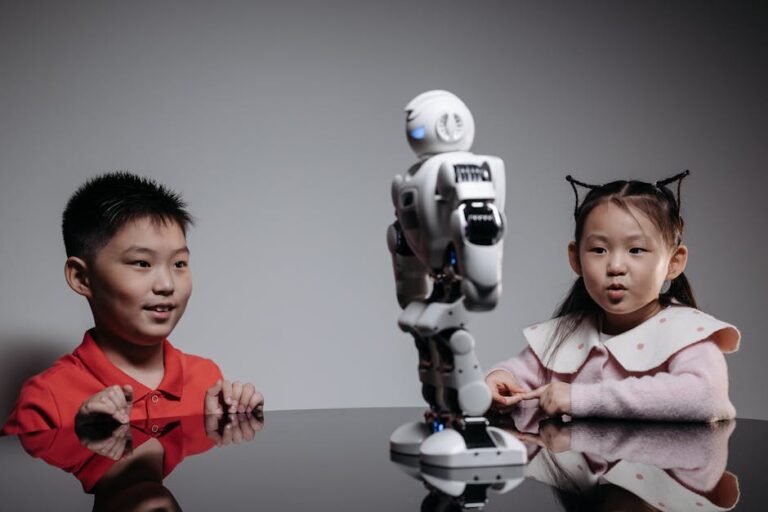

Picture this: It’s 2025, and India is buzzing. From the hyper-connected metros to the remotest villages, AI isn’t just a buzzword; it’s a quiet force reshaping daily life. But here’s the kicker: this AI revolution isn’t unfolding uniformly. While our urban hubs are sprinting ahead, rural India is thoughtfully adopting, often finding unique, tailored solutions. It’s a tale of two Indias, both embracing innovation but at different paces and with distinct needs.
Urban India: The AI Testbed and Innovation Hub
Recommended AI & Innovation Picks
ChatGPT Plus Subscription
- Enhances creative writing, coding, and content generation.
- Boosts productivity for urban students and professionals.
- Access to advanced AI models and exclusive features.
Price: ₹1,699/month
Redmi Note Series AI Smartphone
- Runs AI-powered agricultural and telemedicine apps for rural users.
- Features AI-enhanced camera for smart photography and image recognition.
- Offers long battery life and robust performance for diverse environments.
Price: ₹26,990
Amazon Echo Dot (5th Gen) with Alexa
- Provides hands-free access to AI virtual assistant (Alexa) for daily tasks.
- Manages smart home devices and provides real-time information.
- Ideal for urban users seeking convenient AI integration and smart living.
Price: ₹5,499

Step into any major Indian city – Bengaluru, Mumbai, Delhi – and you’re living in an AI-powered ecosystem. Our smartphones are smarter, thanks to AI-driven virtual assistants anticipating our needs. From predicting traffic jams in Mumbai to personalising your shopping experience on e-commerce giants, AI is deeply embedded. Fintech apps use AI for everything from fraud detection to personalised investment advice, making financial transactions smoother and more secure. Healthcare in cities is seeing AI assist in diagnostics, speeding up the identification of diseases and even helping surgeons with precision. Walk through a smart building in Gurugram, and AI manages everything from energy consumption to security.
The urban youth, digital natives, are at the forefront of this adoption. They’re quick to embrace new AI-powered tools, from advanced generative AI for creative work to AI-driven productivity apps. This rapid adoption, however, also brings challenges. Data privacy concerns are more pronounced, and there’s a growing conversation around ‘digital fatigue’ as AI nudges and notifications become ubiquitous. As a report by Gadgets360 highlighted recently, “Urban Indians are not just adopting AI; they’re demanding more intelligent, seamless experiences, pushing companies to innovate faster, but also raising questions about ethical AI and data governance.”
Rural India: AI as an Equaliser and Enabler

Now, shift your gaze to rural India. Here, AI isn’t about luxury; it’s about necessity and empowerment. The adoption might be slower, but its impact is arguably more profound. AI is bridging gaps that have existed for decades. Think about agriculture: farmers are now using AI-powered apps to predict weather patterns, detect crop diseases through image recognition, and even recommend optimal irrigation schedules. Drones equipped with AI are surveying fields, providing data that can significantly boost yields and reduce waste. This is a game-changer for communities where agriculture is the backbone.
Healthcare in remote areas is being transformed by AI-driven telemedicine platforms. Patients in villages, who previously had no access to specialists, can now get AI-assisted diagnoses and consultations via their smartphones or local community centres. Education is another frontier; AI is powering personalised learning modules, making quality educational content accessible even where trained teachers are scarce. Financial inclusion, too, is getting a massive boost. While UPI has been revolutionary, AI-driven micro-lending platforms are now assessing creditworthiness for individuals without traditional banking histories, offering small loans to empower local businesses and entrepreneurs. NDTV Gadgets recently featured how “AI is enabling a ‘leapfrog effect’ in rural India, allowing communities to bypass older technologies and directly access advanced solutions that were once unimaginable.”
Bridging the Divide: Government Initiatives and Tech for Good

The government’s push through initiatives like Digital India and BharatNet has been crucial in laying the groundwork – expanding internet connectivity and digital literacy programs. But it’s not just top-down. Many innovative startups and NGOs are focusing specifically on rural AI solutions, often developing applications in local languages and with user interfaces designed for first-time internet users. These ‘tech for good’ initiatives are often the bridge, translating complex AI capabilities into tangible benefits for everyday villagers.
The focus is on creating ‘phygital’ solutions – where digital AI tools integrate seamlessly with physical infrastructure and local community support. For example, AI-powered kiosks in villages, managed by local entrepreneurs, provide access to government services, education, and healthcare advice, making technology approachable and dependable.
Final Thoughts: A Truly Intelligent Bharat
The AI narrative in India isn’t about one outpacing the other. It’s about two distinct journeys converging towards a common future: a truly intelligent Bharat. Urban centres will continue to be the crucible for cutting-edge AI research and advanced applications, pushing the boundaries of what’s possible. Meanwhile, rural India will increasingly demonstrate AI’s incredible power as an equaliser, fostering inclusive growth and solving fundamental challenges with ingenuity and accessibility at its core.
The real success of India’s AI revolution won’t just be measured by the number of startups in Bengaluru or the smart cities we build. It will be measured by how effectively we empower a farmer in Rajasthan with predictive analytics, how we provide quality healthcare to a remote village in Odisha through telemedicine, and how we ensure that the benefits of this incredible technology are felt by every Indian, regardless of their postal code. That’s the promise of AI in India for 2025 and beyond – a future where innovation genuinely serves everyone.
Looking for more? Explore our smartphone deals section.
About the Author