
Smartphones in 2025: India’s Pocket-Sized Powerhouses Redefined
Recommended Smartphones Picks
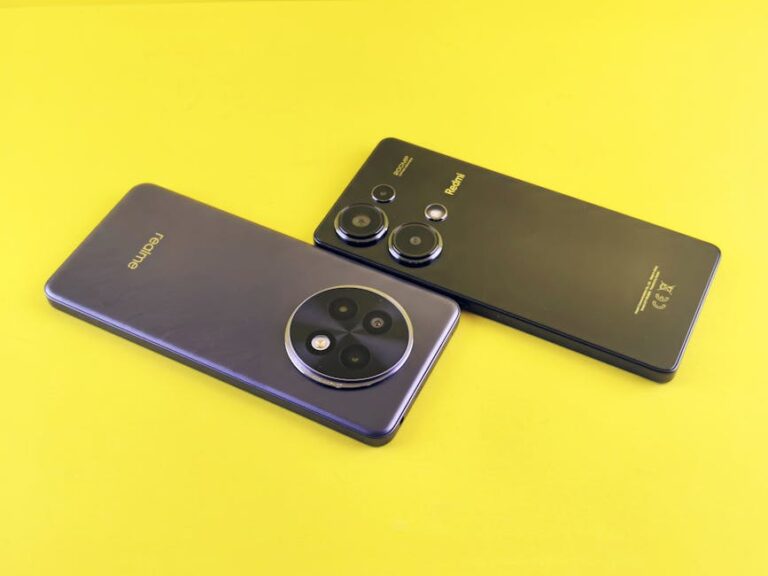
Realme 12x 5G
- Powered by Dimensity 6100+ for smooth 5G performance.
- Large 5000mAh battery with 45W SuperVOOC fast charging.
- Clear 50MP AI camera for sharp photos and versatile shots.
Price: ₹11,999
Redmi Note 13 5G
- Sleek design with robust 5G connectivity for ultra-fast speeds.
- Impressive 108MP main camera for detailed computational photography.
- 5000mAh battery with 33W fast charging for extended usage.
Price: ₹17,999
Samsung Galaxy A15 5G
- Reliable Samsung experience with long-term OS updates commitment.
- Vibrant Super AMOLED display and a 5000mAh battery.
- Versatile triple camera system for diverse photography needs.
Price: ₹16,499

Remember a time before smartphones? For many of us, especially the younger generation in India, it’s almost impossible to imagine. From ordering groceries via UPI to attending online classes, binge-watching the latest web series, or staying connected with family spread across continents, our mobile phones have transcended their original purpose. In 2025, as India continues its rapid digital transformation, smartphones aren’t just gadgets; they are the epicentres of our personal and professional lives, evolving at an exhilarating pace. Let’s dive into what makes these pocket-sized powerhouses tick in the India of tomorrow.
The Evolving Indian Smartphone Landscape

India’s smartphone market has always been a battleground, known for its fierce competition and rapid innovation. In 2025, this remains true, albeit with a refined focus. While budget-friendly devices still dominate the volume, the premium segment is witnessing unprecedented growth, driven by aspirational consumers in Tier-1 and increasingly Tier-2 cities. Brands like Xiaomi, Samsung, Realme, Vivo, and OPPO continue to hold significant sway in the affordable and mid-range segments, constantly pushing the envelope with feature-rich offerings. Meanwhile, Apple and Samsung’s flagships are capturing a larger share of the affluent market, as EMI options and attractive trade-in deals make high-end devices more accessible than ever.
The “Make in India” initiative has also matured significantly by 2025. Many global brands have ramped up their local manufacturing and assembly, contributing to job creation and sometimes even offering slightly more competitive pricing due to reduced import duties. This not only strengthens India’s manufacturing base but also caters specifically to local demands and preferences. According to recent analyses, the Indian smartphone market is projected to continue its robust growth, with a significant shift towards 5G-enabled devices and a greater emphasis on localized content and services. A report from Gadgets360 earlier this year highlighted how critical localized software experiences and after-sales service have become for consumer retention, especially in non-metro regions.
Beyond Connectivity: The AI Revolution in Your Pocket

If there’s one technology that has truly redefined the smartphone experience by 2025, it’s Artificial Intelligence (AI). AI isn’t just a buzzword; it’s deeply integrated into almost every facet of our mobile phones. From hyper-intelligent virtual assistants that understand nuanced Indian accents and regional languages, to on-device AI processing units (NPUs) that handle complex tasks without relying on cloud servers, the smarts are truly in your hand.
Imagine your phone proactively suggesting the best route based on real-time traffic and your calendar, optimizing battery usage based on your daily habits, or even enhancing your voice calls by filtering out the cacophony of Indian street noise. AI powers incredible computational photography, allowing even mid-range phones to capture stunning low-light photos and crisp portraits. Predictive text has become eerily accurate, and real-time language translation is now seamless, bridging communication gaps instantly. This on-device AI ensures greater privacy and faster performance, truly making our smartphones intuitive personal assistants rather than just communication devices.
5G: The Speed Demon Unleashed Across India
By 2025, 5G connectivity is no longer a luxury but a widespread reality across most urban and even many semi-urban areas of India. This generational leap in network technology has unlocked unparalleled speeds and ultra-low latency, transforming how we interact with our devices. High-definition video streaming is buffer-free, online gaming is lag-free, and cloud-based applications run as smoothly as native ones. The impact is profound: from enabling remote work and telemedicine in rural areas to facilitating the rapid adoption of augmented reality (AR) and virtual reality (VR) experiences.
The widespread availability of affordable 5G smartphones, some starting under ₹15,000, has been a key driver of this adoption. This means faster UPI transactions, quicker downloads of large files for students and professionals, and a generally snappier digital experience for millions. The dream of a truly connected ‘Digital India’ is becoming a tangible reality, with 5G smartphones acting as the primary gateway for many.
Camera Wars: More Than Just Megapixels
In the age of Instagram Reels, YouTube Shorts, and WhatsApp statuses, the smartphone camera has become paramount. In 2025, the camera wars are less about who has the most megapixels and more about computational photography and versatile lens systems. Quad-camera setups with dedicated ultrawide, telephoto, and macro lenses are standard, even in mid-range devices. AI-powered scene recognition automatically adjusts settings for the perfect shot of your favourite street food or a majestic landscape.
Low-light performance has seen incredible advancements, allowing users to capture vibrant photos even in dimly lit environments. Video recording capabilities have also evolved, with features like cinematic modes, advanced stabilization, and even 8K recording becoming more common. For many Indians, their smartphone is their primary, if not only, camera, making these advancements crucial for capturing life’s moments.
Battery Life & Charging: The Endurance Race Continues
For the average Indian user, reliable battery life is non-negotiable. Long commutes, frequent power cuts in some regions, and heavy usage patterns demand devices that can last all day. In 2025, smartphones offer larger battery capacities (often 5000mAh and above) coupled with intelligent AI-driven optimization that learns user habits to conserve power. Fast charging has become incredibly efficient, with 60W, 80W, and even 100W+ solutions capable of fully charging a phone in under 30 minutes, a boon for those on the go. Wireless charging and reverse wireless charging (to power accessories like earbuds) are also becoming more prevalent, adding to convenience.
Privacy & Security: A Growing Concern
As our lives become increasingly digital, concerns around privacy and security have naturally grown. Smartphone manufacturers are responding with robust solutions. In-display fingerprint sensors are now ubiquitous, and advanced facial recognition systems offer secure unlocking. Operating systems like Android and iOS have introduced more granular privacy controls, allowing users to precisely manage app permissions and data access. Regular security updates are pushed by brands to protect against emerging threats, and consumer awareness about digital hygiene, fueled by initiatives from government and private bodies, is also on the rise. Data protection and user trust are paramount, and brands failing on this front risk losing their standing.
Sustainability & Durability: A New Focus
Environmental consciousness is slowly but surely making its way into the smartphone industry. In 2025, we’re seeing a greater emphasis on sustainability. This includes phones made with recycled materials, commitment to longer software support to extend device lifespan, and modular designs that make repairs easier. Brands are also reducing packaging waste and investing in initiatives to responsibly recycle e-waste. Furthermore, durability, indicated by IP ratings for water and dust resistance, is becoming a standard expectation, ensuring our devices can withstand the rigours of daily Indian life.
Final Thoughts
In 2025, the smartphone in India is more than just a device; it’s a testament to technological progress and a mirror reflecting the nation’s digital aspirations. It’s an indispensable tool that empowers individuals, connects communities, and drives economic growth. From the lightning-fast speeds of 5G to the intelligent assistance of AI, the sophisticated cameras, and the growing focus on sustainability, smartphones are continually evolving to meet the dynamic needs of over a billion people. As noted by Android Authority, the convergence of affordability and advanced features will continue to define the market, ensuring that innovation remains accessible and impactful for the vast Indian consumer base. The journey of the smartphone in India is far from over; it’s merely entering its most exciting chapter yet.
Looking for more? Explore our AI innovations section.
About the Author